Fabrics made from these smart yarns have potential application in professions that involve high risk. A police officer in danger, a firefighter who is hurt while at work, a wounded soldier at the warfront may not be in a position to send a message requesting for help. But the apparels infused with smart yarns would be able to do it. The clothes can be designed accordingly; to store energy, which will provide power to operate small electronic devices. A mobile phone or any other form of communication device attached with the clothing can transmit the information from the garment to a command post. It can also be used in garments and used for monitoring health. It also foresees lucrative applications as performance apparel.The concept of electrically sensitive clothing made from nanotube infused cotton yarn can be adapted in various fields based on their exposure to potential risks. The burgeoning interest in nano technology opens a floodgate of opportunities for developing new and innovative products in the textile sector.
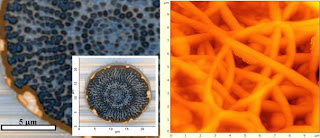
Presently, smart fabrics are manufactured from metallic or optical fibres. They wear away quickly, and are brittle and uncomfortable. Laundry of such textiles also proves to be troublesome. Nano technology has come up with an innovative way of combining the two fibres; one natural and the other nano technology. Cotton yarn with a thickness of 1.5 millimeters is dipped a few times in a solution of a special sticky polymer in ethanol and dried. This enables the yarn to conduct power from a battery to illuminate light emitting diode device. The antibody anti-albumin is added to the carbon nanotube solution. Anti-albumin reacts with albumin, a protein that is found in blood. When the anti-albumin infused yarns were exposed to albumin, the conductivity is increased considerably. This method is more sensitive, simple and durable. By repeating the process a few times, normal cotton becomes a conductive material due to the carbon nano tubes which are conductive in nature. After the process is complete, the cotton yarn still retains its soft and supple features. This yarn is much better comparatively over the current designs available for electrically conducting fabrics. The only change in the yarn is that it turns into black color due to the presence of carbon.


Chinese and U.S. researchers have developed a carbon nanotube-coated smart yarn which can conduct electricity and be woven into textiles to detect blood or to monitor health. According to one of the lead researchers, today’s smart textiles, which are made of metallic or optical fibers, are fragile and not comfortable. So the team combined two fibers, one natural and one created by nanotechnology, to build a new kind of smart textile. If a soldier wearing clothes made with this fabric was wounded, his mobile phone could alert a nearby patrol to save his life. But read more…Researchers can use its conductivity to design garments that detect blood.” (Credit: Nicholas Kotov lab, University of Michigan) You’ll find a much larger version and another photo on this page. This research project has been led at the University of Michigan by Nicholas Kotov, Professor of Chemical Engineering, and a member of his lab, PhD student Bongsup Shim. They’ve worked with Wei Chen, Chris Doty and Chuanlai Xu, researchers at Jiangnan University, Wuxi, Jiangsu Province, China. So how did this team build these smart textiles? “To make these ‘e-textiles,’ the researchers dipped 1.5-millimeter thick cotton yarn into a solution of carbon nanotubes in water and then into a solution of a special sticky polymer in ethanol. After being dipped just a few times into both solutions and dried, the yarn was able to conduct enough power from a battery to illuminate a light-emitting diode device. ‘This turns out to be very easy to do,’ Kotov said. ‘After just a few repetitions of the process, this normal cotton becomes a conductive material because carbon nanotubes are conductive.’ What are the properties of these smart textiles? “The only perceptible change to the yarn is that it turned black, due to the carbon. It remained pliable and soft. In order to put this conductivity to use, the researchers added the antibody anti-albumin to the carbon nanotube solution. Anti-albumin reacts with albumin, a protein found in blood. When the researchers exposed their anti-albumin-infused smart yarn to albumin, they found that the conductivity significantly increased. Their new material is more sensitive and selective as well as more simple and durable than other electronic textiles, Kotov said.”And what could be the applications for such materials? “Clothing that can detect blood could be useful in high-risk professions, the researchers say. An unconscious fire-fighter, ambushed soldier, or police officer in an accident, for example, couldn’t send a distress signal to a central command post. But the smart clothing would have this capability. Kotov says a communication device such as a mobile phone could conceivably transmit information from the clothing to a central command post.”In Carbon Nanotube Clothing Could Take Charge in an Emergency, Larry Greenemeier describes how these yarn could be used in a more expressive way. (Scientific American, December 12, 2008). ” soldier is badly wounded on the battlefield in Afghanistan or Iraq by a roadside explosive. As he lies beside his vehicle, unable to reach his radio to contact his unit on his location and condition, blood from the wound seeps into his shirt. Luckily, its fibers are coated with cylindrical, nanosize carbon molecules that contain antibodies able to detect the presence of albumin, a protein common in blood. The shirt senses that its wearer is bleeding and sends a signal through the shirt’s carbon nanotubes (1,000 times more conductive than copper) that activates an emergency radio-frequency beacon on the soldier’s belt. This distress call is picked up by a nearby patrol that rushes to the aid of their wounded comrade. This may be the stuff of science fiction, but ongoing development of fabrics coated with carbon nanotubes and other nanoscale substances could someday make such smart clothing a reality, says Nicholas Kotov.” This research work has been published by Nano Letters, an American Chemical Society journal, under the title “Smart Electronic Yarns and Wearable Fabrics for Human Biomonitoring made by Carbon Nanotube Coating with Polyelectrolytes. The idea of electronic yarns and textiles has appeared for quite some time, but their properties often do not meet practical expectations. In addition to chemical/mechanical durability and high electrical conductivity, important materials qualifications include weavablity, wearability, light weight, and ’smart’ functionalities. Here we demonstrate a simple process of transforming general commodity cotton threads into intelligent e-textiles using a polyelectrolyte-based coating with carbon nanotubes (CNTs). Along with integrated humidity sensing, we demonstrate that CNT-cotton threads can be used to detect albumin, the key protein of blood, with high sensitivity and selectivity. Notwithstanding future challenges, these proof-of-concept demonstrations provide a direct pathway for the application of these materials as wearable biomonitoring and telemedicine sensors, which are simple, sensitive, selective, and versatile.”


